Thong Pha Phum

Not quite unseen.

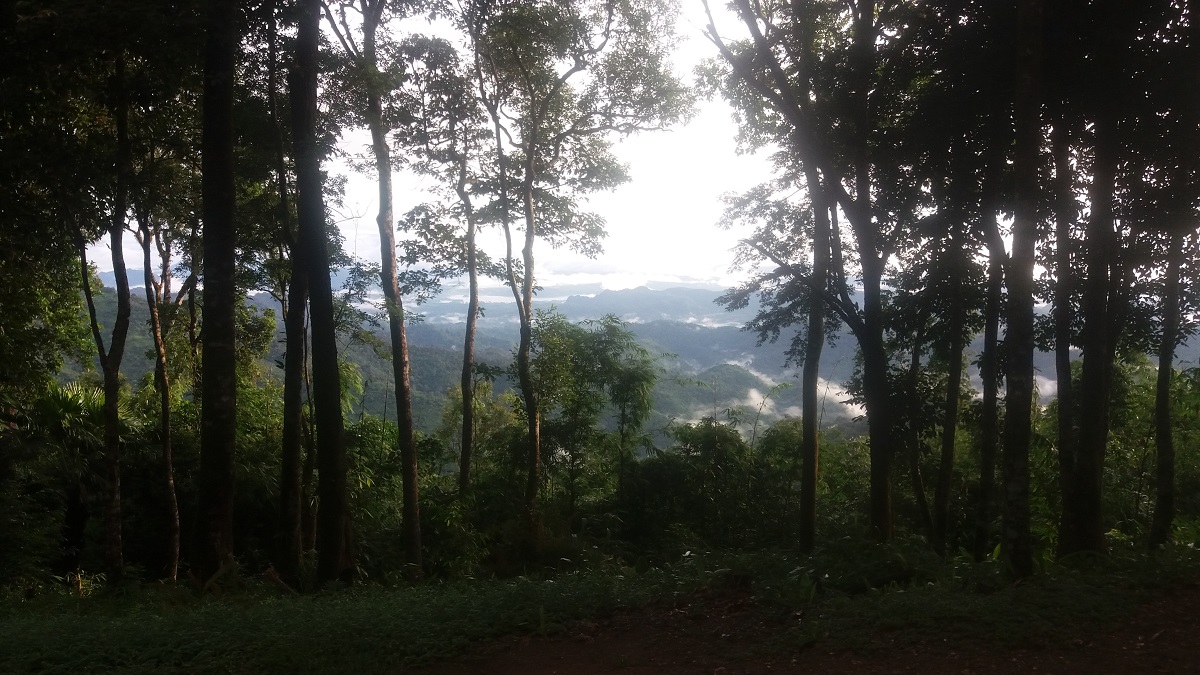
It should be avoided on holidays. It is popular with locals. But Thong Pha Phum National Park in Kanchanaburi is one of the last unspoilt areas in Thailand.

Off the beaten track Thong Pha Phum Kanchanaburi

Generally overlooked by the commercially driven tour companies it offers a world of caves, waterfalls, tin mines, and vast tracts of jungle stretching into Burma.

Thong Pha Phum national park Kanchanaburi

Together with neighboring Thung Yai Naresuan, Hua Kha Khaeng, Mae Wong, and Umphang wildlife sanctuary’s, this area makes up one of the most important conservation areas in South East Asia.

Accommodation at Thong Pha Phum

There is a big camp site as well as chalets which are well worn. But still comfortable.There is also an option to book a tree house.

I-Thong Village Pilok Thong Pha Phum Kanchanaburi

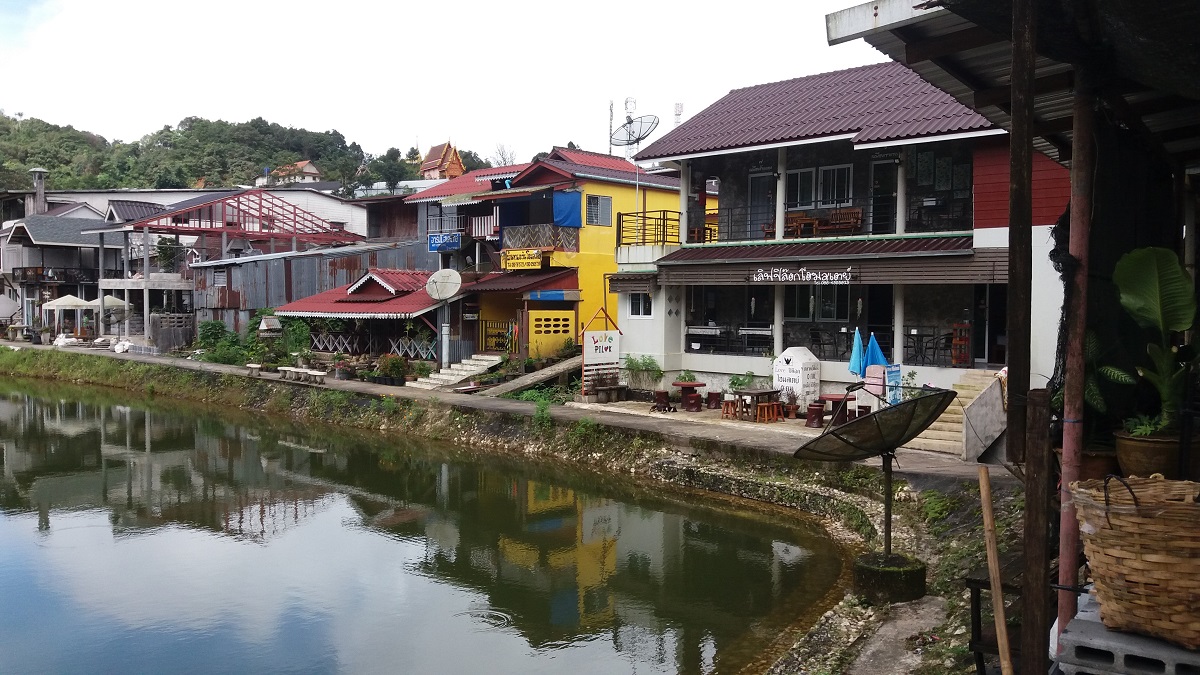
The road continues up, onto Pilok which used to be a thriving Tin and Tungstan mining area. Ban I-Thong on the Burmese border is a sleepy village with some interesting coffee shops which becomes bedlam when it is invaded by tourists over holiday periods.

thailandadventureguide.com

Apprenticeships

Each formal apprenticeship has an equivalent eductional level. Intermediate level 2 is the equivalent of GCSE. Advanced level 3 A Levels, Higher 4,5,6,and 7 are equivalent to a Foundation degree and the Degree 6 and 7 equates to a Bachelors or Masters degree. Some apprenticeships may also give you an additional qualification, such as a diploma.

Higher apprenticeships (levels 4-5) are regulated by Ofsted and the Office for Students. Degree apprenticeships (levels 6-7) are regulated by the Office for Students who follow guidance from QAA (Quality Assurance Agency) – the UK’s quality body for higher education.

Degree apprenticeships offer a win:win for everyone.  Universities expand their student population and revenue streams. Employers build a pipeline of skilled talent within their business. And students get the opportunity to gain degree-level qualifications without paying substantial university fees – as is the case with traditional undergraduate degrees. 

So how are degree apprenticeships funded? 

The quick answer is: usually by the employer – but there is loads of government funding available for degree apprenticeships. Smaller businesses might see up to 95% of costs covered.  

They may take the form of general IT or digital apprenticeships that allow you to focus on a particular area, such as:

  • artificial intelligence (AI)
  • computer programming, including coding
  • computer science
  • information and communications technology (ICT)
  • networking
  • software development
  • software engineering.

The programme may then allow you to specialise even further. For example, computer science degree apprenticeships typically allow you to develop skills as a programmer while you decide whether to go into data analysis, tech consulting or forensics.

If you have a passion for gaming and would be interested in game design and development apprenticeships, read more about video game careers.

There are also apprenticeships for those considering cyber security training.

What does an IT apprenticeship involve?

An apprentice should be employed for at least 30 hours per week where they’ll complete a minimum of 12 months training. Most IT and digital apprenticeships are longer and can last for up to 24 months.

Apprentices undertake training both on and off the job, but all apprentices must be given a minimum 20% of off-the-job training to meet the requirements of the programme. This training must be structured, reviewed and most importantly help the apprentice achieve the knowledge, skills and behaviours included in the apprenticeship standard.

Off-the-job training must be ‘away’ from the workplace but does not have to be ‘outside’ the workplace – so it can include a range of methods such as role-play, online learning, job shadowing or industry visits.

At the end of the training period, the apprentice takes an end-point assessment managed by an independent assessor. The IT and digital end-point assessments include the collection of key pieces of work in a portfolio, an employer’s reference, a project and finally an interview with the assessor. At the end of the process the apprentice is graded.

The BCS Digital IT Apprenticeship Standards, set out by BCS, The Chartered Institute for IT, provide more information and cover key IT and digital apprenticeship roles at Levels 3 and 4, including:

  • artificial intelligence (AI) data specialist
  • cyber security technologist
  • data analyst
  • data technician
  • digital marketer
  • infrastructure technician
  • IT technical salesperson
  • network engineer
  • software developer
  • software tester.

If you complete an IT/digital apprenticeship through BCS, you can apply for recognition of attaining the professional RITTech standard and get added to their register. Registration lasts for three years, and you’ll also have one free year as a BCS Associate member.

How much will I be paid?

All apprentices are paid the National Minimum Wage (NMW), which currently stands at £5.28 per hour for apprentices under 19, and those aged over 19 who are in their first year (as of April 2023).

If you’re over 19 and have completed the first year of your apprenticeship you must be paid the minimum wage rate for your age.

To check apprentice rates and the NMW, visit GOV.UK – Become an apprentice.

As an apprentice you’ll be paid for your normal working hours, as well as for any training that is part of your scheme. You’re entitled to 20 days’ paid holiday per year, plus bank holidays.

Salaries are determined by individual employers. For instance, you could earn £21,220 plus benefits as part of Barclays’ four-year Cyber and Security Degree Apprenticeship. Accenture pay apprentices on their two-year Masters-level Digital and Technology Solutions Apprenticeship programme a starting salary of between £25,700 and £29,480, depending on your level of experience.

For detailed information about how apprenticeships work, pay rates, entry requirements and the difference between an apprenticeship and an internship, see what is an apprenticeship?

How do I apply?

Most applications are made online by completing an application form, although some methods may vary so check with the organisation first.

Apply for apprenticeships as you would for a job. Thoroughly research the company that you’re interested in and ensure your CV is up to date. You’ll need to tailor your application to fit the role by including evidence of relevant experience and examples of when you’ve demonstrated the required competencies.

For IT and digital roles, you could provide examples of any programming you’ve done or systems you’ve built – either in your spare time or as part of a university project.

Some organisations may ask you to sit situational judgement, numerical and psychometric tests as part of their initial recruitment process. You may then need to attend an assessment centre or undergo telephone or video interviews before reaching the final interview stage.

Read more about how to apply for an apprenticeship.

Find out more
Songkran water festival

It is the time of year when Thai’s from all over the world return to their families, their homes and villages to pay respect to their elders. And to join the kids celebrating Thailands Water Festival.

Songkran is the New Year’s festival. New Year’s Day is 13 April every year, but the official holiday period includes 14–15 April as well. And unofficially stretches through to the following weekend. The word “Songkran” comes from the Sanskrit word saṃkrānti which literally means “astrological passage”, transformation or change.


Mornings begin with visiting the local temple and offering food to the monks is commonly practiced. Later in the day pouring water on Buddha statues represents a way of purification, washing away the past.

It is a festival of unity.


People who have moved to other countries usually return home to their loved ones and elders and the younger members of the family show respect by pouring fragrant water over the palms of elders’ hands. Paying reverence to ancestors is also an important part of Songkran tradition.

Main streets in the towns and villages are closed to traffic to allow both young and old celebrate by splashing water on each other and engaging in fierce water battles. Water barrels are placed on virtually every road and traffic runs the gauntlet of laughing noisy kids armed to the teeth with an impressive array of water guns, hosepipes and fragrant paste.


Gunsmithing skills are also an essential service.

Farmstays

A lake surrounded by mountains. Peace, tranquility and healthy living at Phuu Fa Nam Organic Farm.

Tucked away on the back roads is an organic farmstay in Suphanburi. A working farm supplying organic produce to markets in Bangkok.

Phuu-Fa-Nam

Letter of consent

Applying for the new Thai e-passport is super quick and efficient. Except when your brother is a minor under the age of sixteen. We had to get a form from Amphoe for his passport. The other complication was that Dad is stuck in the England trying to organise a visa for the family to move and settle in the UK.

In which case he is required to provide a letter confirming that he consents to my Mum applying to renew passports for my brother and myself.

This he did.

He posted us the letter of consent together with a copy of his passport which took three weeks to get to us. Note for Dad, next time pay the extra and send it priority delivery.

Then when we eventually got up to Bangkok we found that they couldn’t accept it. It needs to be certified by the Thai Embassy in London on an official form, all in Thai.

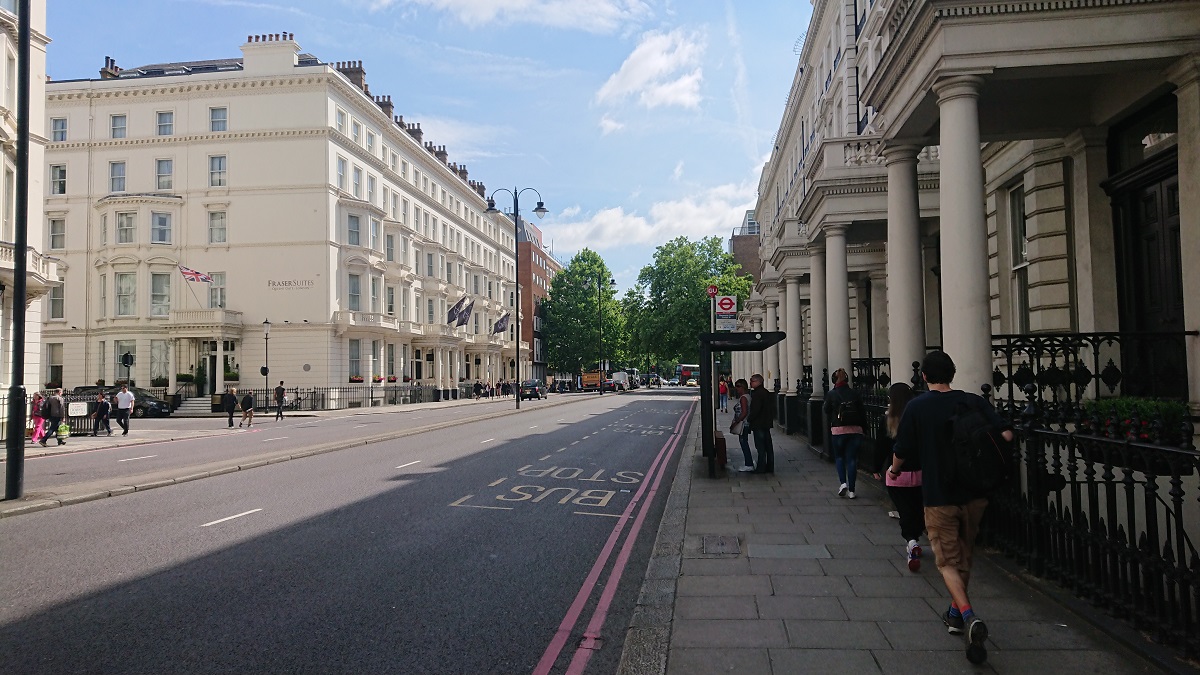
He took leave, the train to the London Victoria Station and the District Line to Grosvenor Rd. From there he followed Google maps to the Thai Embassy.

Grosvenor Road London

The Embassy was not quite as efficient as they are in Bangkok. At first he joined the wrong queue but eventually got everything done and arranged to have the letter of consent and certified copy of his passport mailed back to him in the self addressed envelope which he had bought from the Post Office which is a priority service they offer.

He later found Rosa’s Thai Cafe which is near the London Victoria station before taking the train home. The documents will take three working days to process and when he gets them back he will courier them to us so we can pick the passports up when we next go up to Bangkok.


Termite mushrooms

Every year stalls pop up on the 3086 from Kanchanaburi selling termite mushrooms which the local villagers collect from the mountain forests.

Termite mushroom sellers Nong Prue Kanchanaburi

The het khone termite mushroom is regarded by Thais as the king of them all. And at the height of the mushroom madness cars from Bangkok and even further afield can be seen queuing up to buy this expensive and much sought after delicacy.

Termite mushroom madness Nong Prue Kanchanaburi

They appear when the weather starts to change at the end of the rains. After the termites have swarmed from their nests to establish new colonies. Giving the mushroom spores in the organic matter the ants have gathered, the chance to germinate and sprout.

In the central region het khone are found in the Phetchaburi, Kanchanaburi provinces as well as the mountainous part of Suphan Buri. But the sweetest, tastiest mushroom are to be found in Nong Prue in Kanchanaburi.

This small farming town has a well established reputation as the mushroom capital of Thailand. And the stalls pop up every year at the intersection with the road into the town, transforming it into a bustling market as the customers arrive in search of the freshest and the best mushrooms on offer.

These are special days for the local people who wait patently for the first mushrooms to appear. And just before the rains cease completely there will be extreme hot and oppressive weather which they refer to rawn het or “mushroom heat”.

There is another variety of het khone grows in Isan. They are called het pluak by the locals and can be found at the beginning of the rainy season, from late May through early June. And the villagers gather them for eating rather than to sell. But when the price goes up they find their way to the markets in Bangkok.